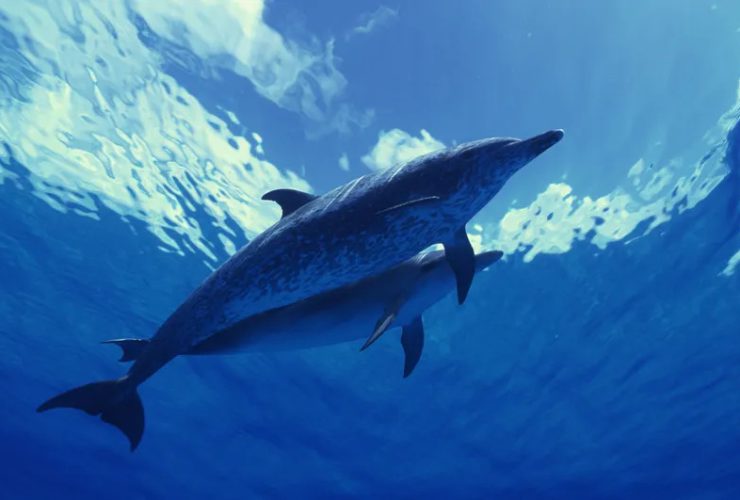
Dolphin, cliché for sale ! (Feb 2008)
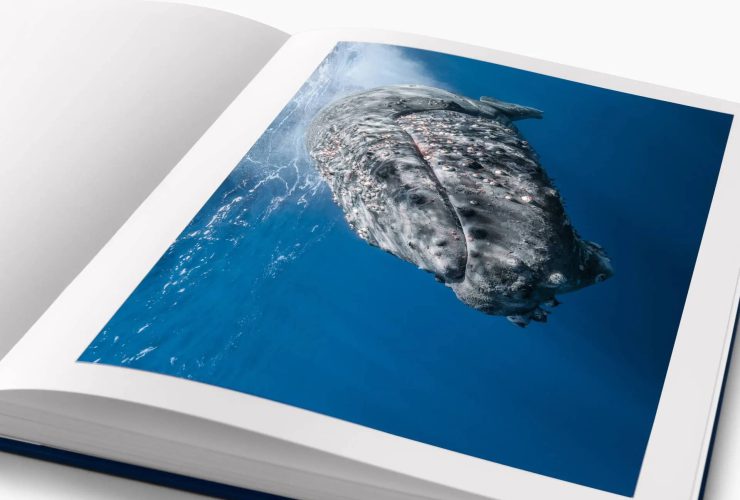
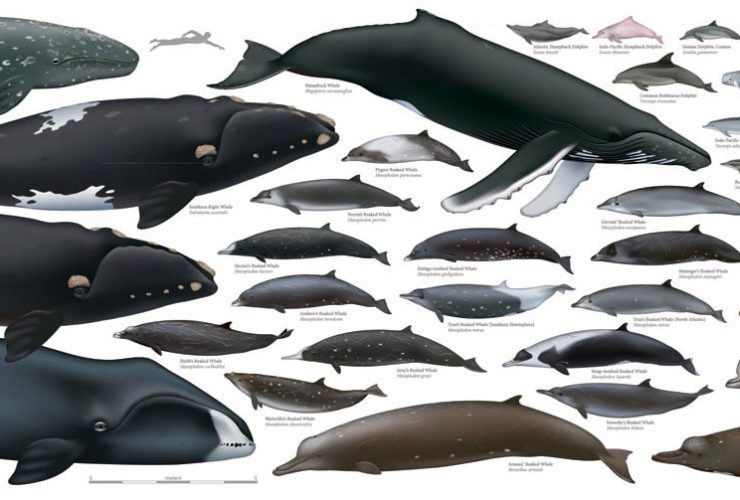
It's hard not to be impressed by the number of photos of dolphins or whales in magazines. We see them everywhere! Don't you?



It's hard not to be impressed by the number of photos of dolphins or whales in magazines. We see them everywhere! Don't you?
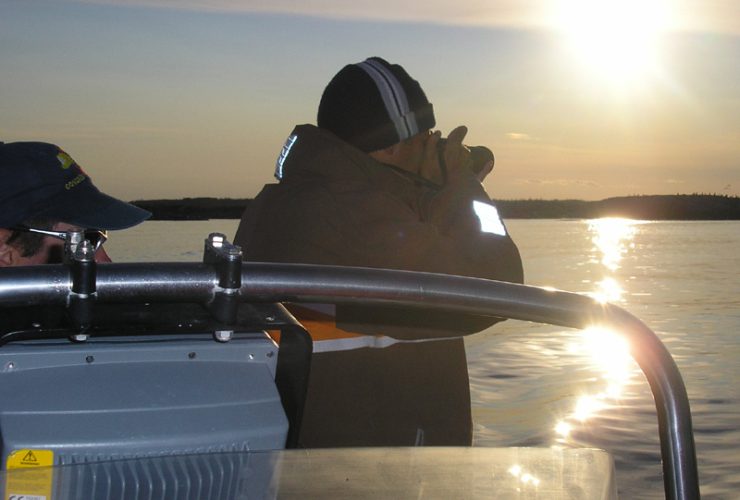
I thought I wouldn't be able to work on cetaceans this summer 2007 due to my knee injury, but I was able to get an opportunity with G.R.E.M.M (Groupe de Recherche et d'Éducation sur les Mammifères Marins) to help them with their AOM project: Activities d'Observation en Mer.
Portneuf-Sur-Mer - Quebec/Canada, July 2006.
Julien Marchal
In 2001, I worked as a volunteer in Quebec (Canada) on the cetaceans of the St. Lawrence River" and "Swiss Cetacean Society (2000-2001)".
When I look at my statistics concerning the files read on my site, I notice that few people look at my two files -Dolphin Alphabet- and -Whale Alphabet- it's a pity! Yet it is a precious and useful help to get information or references about cetaceans.
For more than 10 years now, I have been working on these two files to enrich and improve them and make them easier to read for all audiences.
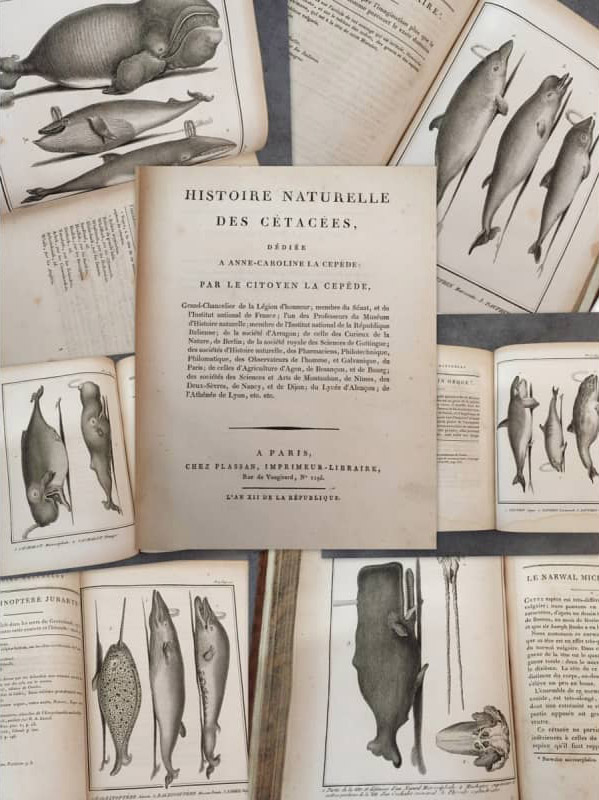
Just choose a word and you'll get quick information about it.
In Word, you click on - Edition - then - Search -, type your word and check - Whole word - finally - Next -. You will get the word directly in alphabetical order. It is very simple. From there, you get all the references I got in my readings (books, press articles, reports, ....) to help you in your answer. You have the page number, the title of the book in italics, the author and the date of edition.
The goal is to bring you recent or old data on a word you would like to have results on. I don't know of anyone who has had the idea to create such a valuable file. It will simplify your life when you are looking for a document in the library, bookstores or when you want to order a certain document.
Obviously, it was my choice to decide which word would be in either alphabet. I didn't want to have the same word in both alphabets. Or if it is, it is specifically for that species of whale or dolphin. Also, this is only for my personal bibliography and not any other. So, obviously you can't have all the references noted. It's up to you to choose them.
I apologize in advance for the fact that the file is on PC (Word) and not MAC. If a page number is wrong or my information is wrong or if I have forgotten a valuable indication in the book, please tell me and I will correct it immediately.
In any case, know that it will help you in your knowledge and save you time.
Good research!
Montreal - Quebec/Canada - January 2006.
Julien Marchal
In France, we are fortunate to have PELAGOS. In Monaco, France and Italy each set up an "awareness and whale-watching" working group on the " Marine Mammal Sanctuary in the Mediterranean " to work for the Ministry of the Environment.
This group meets regularly in Hyères in the offices of the National Park of Port - Cros. All decisions and meetings are taken in these premises.
The group brings together scientific and non-scientific associations, laboratories, universities, schools and professionals of the sea.
The data collected at sea by the different scientific actors and participants are brought to Mr. Beaubrun P.C, director of the laboratory of the Ecole Pratique des Hautes Etudes (EPHE) based in Montpellier.
In Canada, more precisely in the Province of Quebec, tens of thousands of marine mammals are victims of incidents related to various human activities. The St. Lawrence is no exception to this reality involving at least 13 species of marine mammals, cetaceans and seals.
In 2004, a group of experts recommended the creation of a network of organizations and institutions in Quebec that were already working with marine mammals. The Quebec Marine Mammal Emergency Response Network was born.
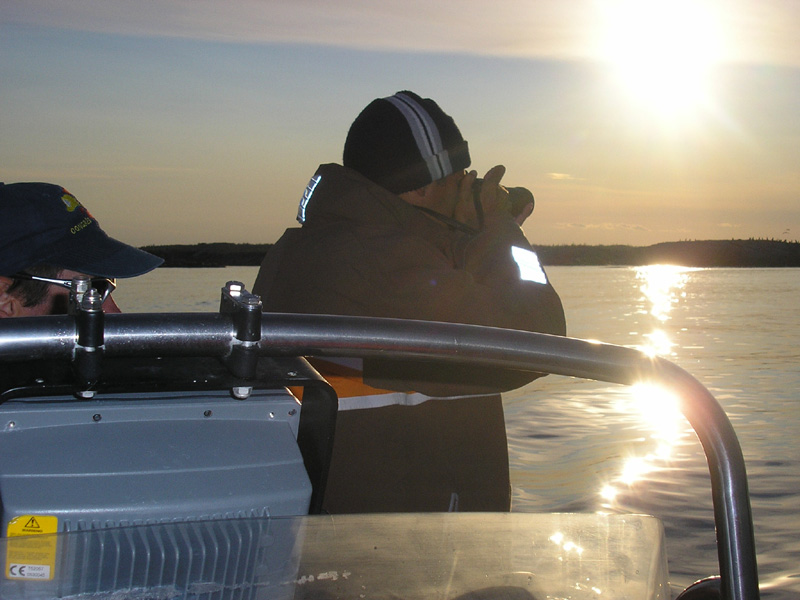
It is funded by Fisheries and Oceans Canada, the Government of Canada's Habitat Stewardship Program for Species at Risk, the Canadian Whale Institute and the National Fish and Wildlife Foundation.
This Quebec Marine Mammal Emergency Response Network allows "the organization, coordination and implementation of measures aimed at reducing accidental marine mammal deaths, rescuing animals in difficulty and acquiring knowledge about dead animals (stranded or drifting) in the waters of the St. Lawrence bordering Quebec.
It is by the toll free number 1 -877-7 whale (1-877-722-5346) that users and residents of the St. Lawrence are invited to alert.
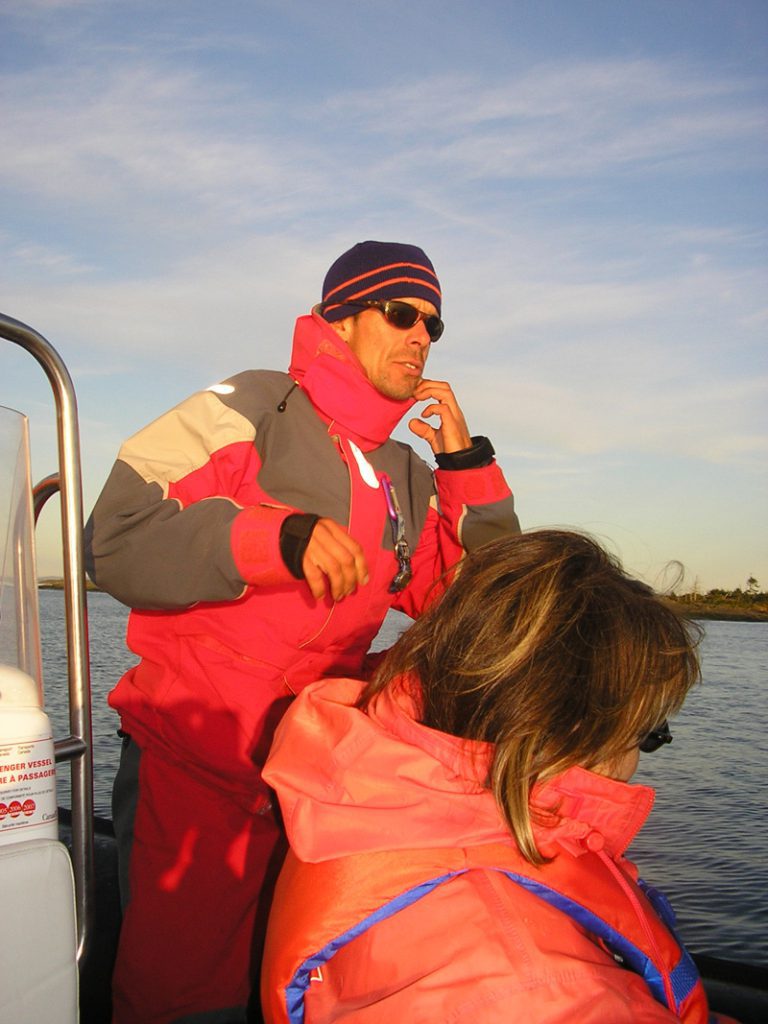
GREMM receives and manages calls to the Network 24 hours a day, 7 days a week. Depending on the case, intervention teams can be organized to intervene rapidly.
The goal of this network is to save endangered species from extinction and to collect data on dead animals.
Therefore, when traveling in Quebec, if you see an animal in trouble, you must call this number as soon as possible.
Thank you for them!
Montreal/Canada. September 2005.
Julien Marchal
In the wake of dolphins and whales...
For a long time, men have been sailing in the wake of the kings of the oceans. Before, to hunt them, nowadays, most of the time, to observe them.
Mentalities have changed in some countries. How after killing cetaceans, some nations have turned to ecotourism?
The Azores, small Portuguese islands spared by mass tourism, are the perfect place to understand this change.
Once an important destination for sperm whale hunting, now one of the most interesting whale and dolphin watching spots in the world.
You will discover the two facets of the most representative islands for this activity: Pico and Faial.
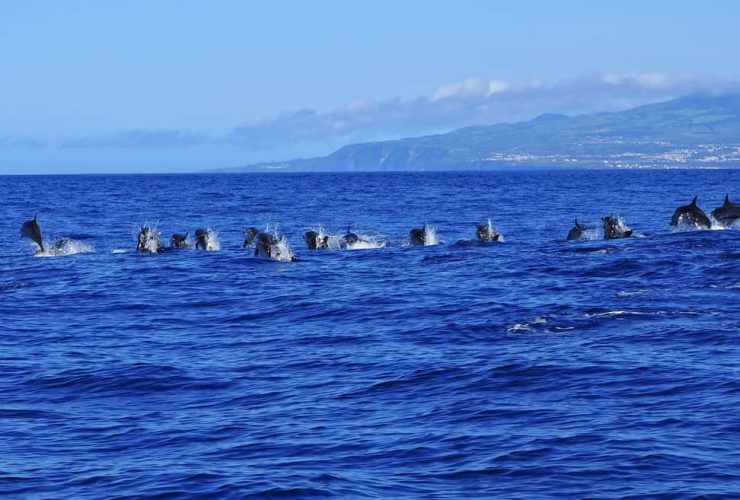
Armed with your greatest respect, cameras or camcorders you will live magical moments in the company of common dolphins, spotted dolphins, sperm whales, rorquals ...
If the dolphins agree, you can go in the water with them...
Dive travelers : Frédéric Lavaud (voyageursdumonde.fr)
Travelers Spain/Portugal: Maria Cordente Ruiz
Ketologist Guide: Julien Marchal
If at the time of your registration for this guided tour, you have already completed with Voyageurs du Monde :
Departure from Paris to Horta on Air Portugal (change in Lisbon).
Arrival in Horta on the island of Faial, you will take the ferry to the island of Pico and after a quick transfer, you will settle in a typical family pension.
You will have time to visit the charming village of Lajes where you will stay and to meet Serge Viallelle. This Frenchman, a cetacean specialist, founded Espaço Talassa, a base for the observation and study of cetaceans in the Azores.
This day will surely be full of emotion, it is dedicated to the meeting of the dolphins and whales of the Azorean sea. You will have lunch on land at noon, then leave by boat with Espaço Talassa.
Before each trip, you will be given a briefing on the cetaceans and afterwards, over a drink, you will be able to talk about these experiences with specialists.
Espaço talassa is the first whale watching base in the Azores. It was founded in 1991. Since the beginning, it takes care of the well-being of the observed animals. It participates in numerous studies on dolphins, whales and sea turtles.
Many specialists, photographers and professionals trust him.
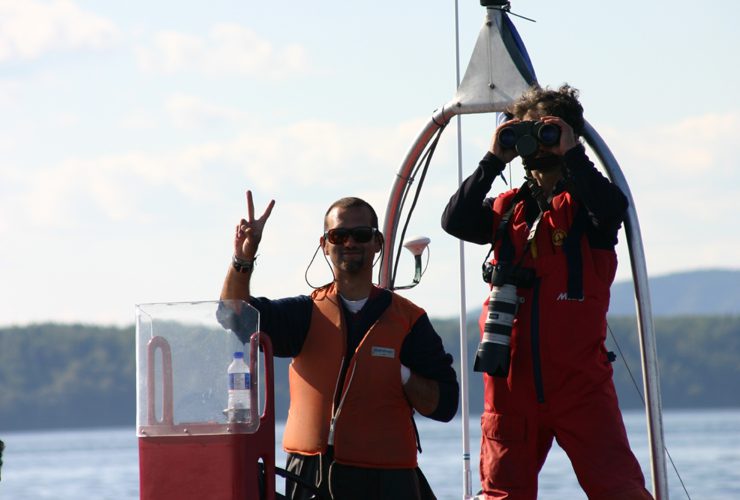
The encounter with the giants of the sea is not without danger. Even if it is proven that whales are aware of the presence of boats at their side and that they are careful. Espaço Talassa is all about safety. Two people from the center and our guide accompany you on the boat and visual contact with the land is always maintained.
In the morning, an easy hike will allow you to see the Queimada lookout, a place used to spot cetaceans from land, formerly for hunting, now for observation.
You will visit the whaling museum in Lajes
In the afternoon, you will go back to observe cetaceans at sea with Espaço Talassa.
The Whalers' Museum in Lajes presents the whale hunt in the Azores. Through a library, a film, exhibitions ... you will discover how the Azorean hunters went to sea. This hunt has always been traditional, even in recent years, far from the massacres that have taken place in other countries. It has been stopped recently, the last sperm whale was hunted in the Azores in 1989!
In the morning, you will go to Madalena to take the ferry. On the way, you will stop in San Roque to visit an old whale reprocessing plant.
In the afternoon, you will visit the city of Horta and can relax on the black sand beach.
In the evening, you can have a drink at Peter's café sport, a sailors' hangout, and see its scrimshaw exhibition: engraving on sperm whale teeth.
Horta, the most important city of the island of Faial, is the obligatory stop for all sailors leaving for America. Its marina is cosmopolitan, you can hear many languages and see sailing ships from all over the world. It is a tradition that every ship that stops in Horta must paint on the harbor so that the rest of the journey goes smoothly. These works of art can be admired throughout the marina.
Full day of cetacean watching and swimming with dolphins. You will leave with Norberto who owns a diving center.
Swimming with dolphins is regulated in the Azores. Two people get into the water with only 5 species of dolphins.
Dolphins are free like whales, so it is not certified that this activity is possible during the outing. In any case, it is up to the center's manager to decide if you can swim with the dolphins. If you are lucky enough to be able to do so, you will enjoy this magical encounter.
In the morning, you will have the chance to do a scuba dive with Norberto. An opportunity to give you a glimpse of the Azorean sea bed.
In the afternoon, you will leave with him for your last sea trip, where if the dolphins agree, you will observe them in their own environment.
Late morning departure from Horta for arrival in the evening in Paris with Air Portugal.
Schedules: Orly: 7:45 am - Lisbon: 9:05 am
Lisbon: 10:15 am - Horta: 11:50 am
From the land the lookout observes the sea and informs the groups (12 people per boat, including two people from Espaço Talassa) about the cetaceans to be observed.
Depending on the sea state, this day is composed of two trips of about 3
hours, return to the port for lunch.
It happened in my childhood to come on vacation in the Aquitaine region with my parents. We were in Lacanau to enjoy the Atlantic Ocean and its region. However, I never had the opportunity to come to the Arcachon basin.